
PaRx People: A Conversation With Rick Hansen
July 10, 2026
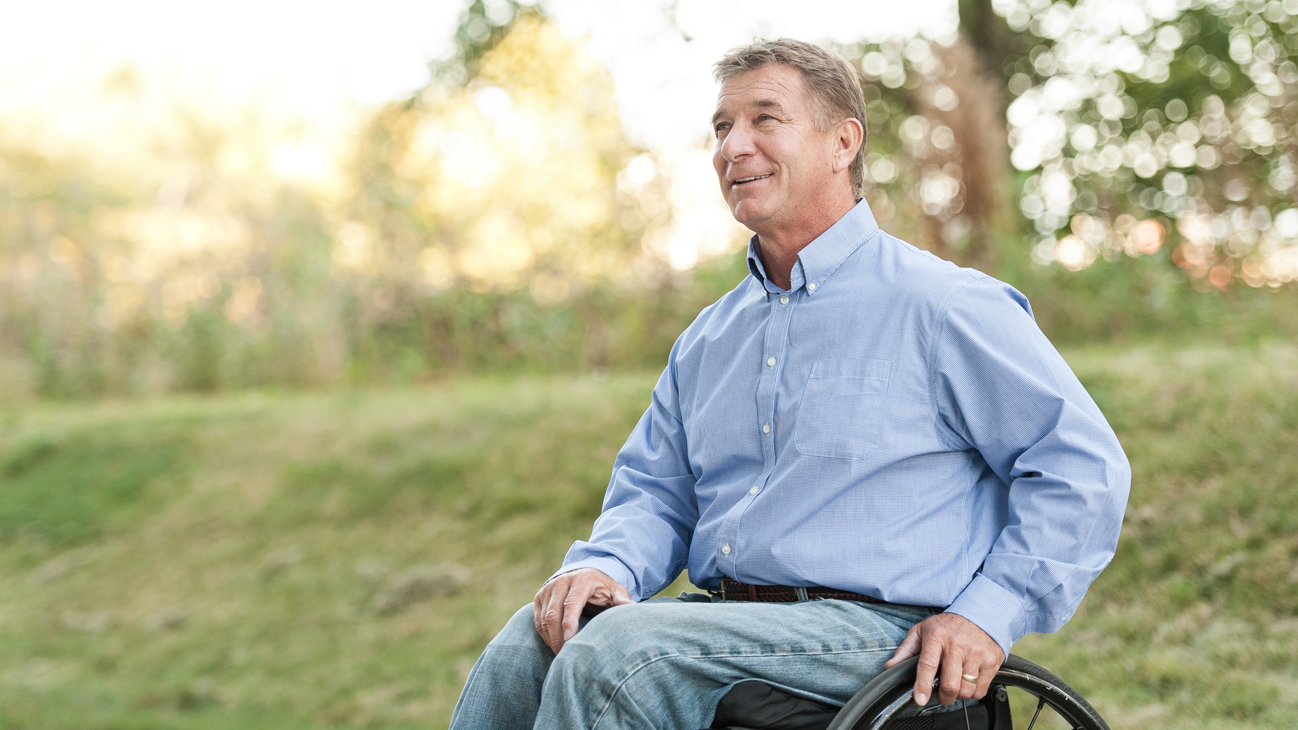
Rick Hansen, CC, OBC is a Canadian track and field athlete (Paralympic Games and Olympic Games), philanthropist, Founder of the Rick Hansen Foundation and a lifelong advocate for people with disabilities in Canada. He is best known as the “Man In Motion” for his legendary 26-month, 34-country, 40,000-kilometre wheelchair journey around the world. His goal: to create amore inclusive world where barriers are removed, and people of all abilities have the opportunity to reach their full potential.
Since completing the Man In Motion World Tour in 1987, Rick has continued to dedicate his life to breaking down barriers and building a society that is accessible and inclusive for all. Through the Rick Hansen Foundation, he and his team work to raise awareness, change attitudes, and create innovative solutions to accelerate a global movement towards accessible spaces – unlocking opportunities and empowering people with disabilities to reach their full potential.
Dr. Melissa Lem, Co-founder of PaRx, sat down with Rick to learn about the early nature experiences that helped inspire his lifelong path of advocacy, the role being active outdoors continues to play a core part in his wellbeing, his ground-breaking Accessible Outdoors program, and how health professionals can help protect nature and access to it for people living with disabilities.
Could you tell me about your early experiences in nature and how they contributed to your career and interests today?
I was lucky enough to be born and raised in British Columbia — one of the most beautiful places on Earth. My earliest memories were always in the outdoors on some kind of adventure, whether it was with my father, my grandfather, uncles, cousins, or occasionally on my own. As a child, it was so amazing to see the wonder and diversity of nature.

In the early days, I was, in many ways, taught to observe. Not just to be there, but to really look at the trees, and watch the birds and their behaviour, the caterpillars, or the spiders, and start to see the interconnectedness of things.
It was absolutely the most wonderful thing to be in my first six years of life and so immersed in that special connectivity between family, friends and nature. I was always on an adventure.
My earliest memories were going through the rainforest on a trail with my father, down little creeks and peering out to lakes. One night, I couldn’t sleep. What kept me up all night was with the mystique of a secret lake that my dad had promised us we were going to go to. Little did I know that he had been there the day before, and pounded a piece of plywood out on a fallen tree that went into the lake.
When we emerged from the forest in the dark, as it was just getting light, I could see the mist rising off the lake. I saw this tree, and my dad said, “Well, we're gonna’ go out on there and see where that platform is. We're gonna’ fish there.”
I was overcome with fear, because I was thinking, how are we going to do this? I can't.
And he said, “Come on, Rick, you can do it. I'm here for you.”
He helped me have the courage to navigate out onto the tree, and when I slipped a little bit he was there with me. He held me, got me out onto the platform, and we caught a bunch of fish. Coming back I was confident and inspired. I didn't need my dad's help; I felt totally capable of doing it myself. Those memories are life lessons, and they burn into your soul.
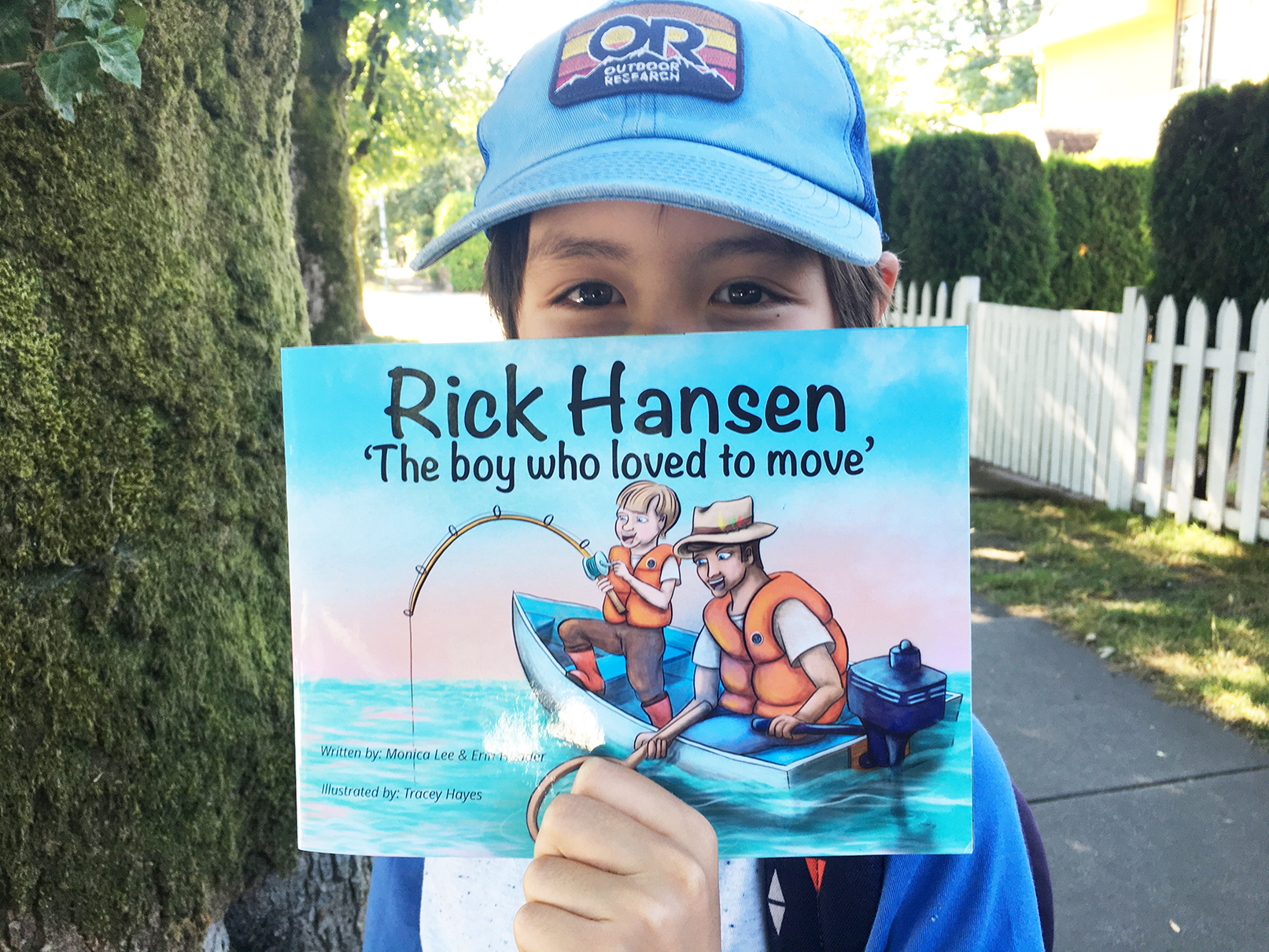
The book you gave my son is called The Boy Who Loved to Move, and it seems as if you've carried that love of moving in nature forward.
I did. And everywhere I went — we travelled through most of British Columbia with my father's job with BC Telephone — I was always planning to go on an adventure, whether it would be down a creek, on the Fraser River, or on a lake.
As it turned out, one of my grand plans was to go to Bella Coola, on the West Coast of British Columbia when I was 15, just graduating from Grade 10. As soon as we finished our last day, me and two buddies went off from Williams Lake all the way to the Bella Coola Valley to fish salmon. It was a grand adventure, until we were hitchhiking home instead of waiting a day for my friend's dad to take us, because we were so excited to get back in time for the Williams Lake Stampede.
We got a ride in the back of a pickup truck with a guy whose tire we'd helped change three days earlier when his truck had broken down, and he decided to return the favour. Of course, that set me in motion to have a catastrophic injury when the truck crashed and rolled. I broke my back and damaged my spinal cord. That adventure had a life-altering outcome. But it also became the beginning of one of the best things that could have ever happened to me. It forced me to challenge myself. To ask, did I need to use my legs in order to be whole as a human being? Who was I?


I was still Rick: the adventurer, the person who loved the out doors and nature, loved sport, and I just had to think of doing things differently. To be interdependent with my family and friends, and accept a little help, or try things with technology. Before I knew it, I was back out with my brother, who piggybacked me down a river bank to go fishing again, I learnt to use an all-terrain vehicle and a four-wheel drive to get out into some incredible spots that no one else could get to. In those ways, I continued to have great adventures with my friends and family.
I was back in motion, with that fundamental recognition that I was still the same person, loved the same things, and needed to find a way to express myself. Nature and the outdoors were a huge part of it.
It’s the 40th anniversary of your Man In Motion World Tour. Can you remember any moments when nature or the outdoors helped keep you going, or were there any other meaningful experiences outdoors along your Tour?
It was a really challenging and daunting thing when I was on such a pace. I would be going through Oregon, or over the Siskiyou Mountains, or along the beaches of California, and seeing this incredible scenery and outdoor vistas waiting to be experienced, but I was so darn busy. I couldn't stop. Every once in a while, I could, or sometimes I had to.

ack L to R: Don Alder, Amanda Hansen, Mike Reid, Nancy Thompson, Lee Gibson
Front: Rick Hansen. Photo credit Rick Hansen Foundation.
I'll never forget the time when I was wheeling through the Everglades between Tampa and Miami. I was exhausted, and everything was so serious and disappointing. It’s hard to see the magic of the experience when you're struggling like that.
This one time we were going over little bridges, over these little creeks in the Everglades. I looked down as I was wheeling. I could see birds, and every once in a while there was an alligator, and also some fish down there. Of course, I love to fish, and I hadn't brought a fishing rod. I just thought, you know what, this is ridiculous, I gotta stop. And so I stopped, and everybody was saying, “You okay, Rick?” I said, “Let's go get a fish.”
We went over to the bridge, and broke out a fishing rod, and hooked onto a garfish. Of course we weren't going to keep it, but we had it without a net, so we ended up doing a human chain, lowering my cousin down from the bridge with a bucket so he could try to get the garfish in the bucket. He basically had it so full of water that it was too heavy to lift up, and the fish flipped out into the water and got away. He dropped the bucket, because it was either him or the bucket, and then we had to go around and pick it up later. It was the funniest, craziest moment for us — kind of creating our own energy, and reminding ourselves, hey, this is a long journey, and you gotta’ take some moments.
Whether it was in Florida, Finland, stopping at the side of the road in Dunedin, or in New Zealand going through a barbed-wire fence and getting us all out to the beach, and going into the water, being outdoors in nature was a mindful thing.

I remember when we were just outside of Prince George in the wintertime, there was this incredible stream, and a trail. We wanted to get out into this place and feel the power of the water, and put all the intensity behind us for just a moment. You could feel a subtle change in your body temperature, or your vibration. It was incredibly powerful. There's probably a physiological explanation for that phenomenon.
Sometimes we're so driven in the work that we're doing, or focused on the mission that we're on, that we forget to take those moments to have those powerful experiences with people in nature.
Water in particular has played a significant part in your life, with exploring and fishing, and now with your Foundation’s ground-breaking Accessible Outdoors Program. Could you tell me what inspired you and your team to create it, and what impact you're hoping to make?
You're right about water. I don't know whether it was conscious or subconscious, or just fate, but it turns out my office is right on the banks of the Fraser River, and so is my home in Steveston. Whether it be creeks, lakes, rivers, or oceans, it really doesn't matter, to have that connection with water will always be important to me.
Here in Canada, we have the largest supply of fresh water in the world and we're bordered by three oceans, yet our marine environment is so inaccessible. The things I've had to do, or the friends I've had to call on to get out into the outdoors are monumental. I’ve been so privileged and it’s kind of a miracle I was able to be able to do that. I think everyone should have the opportunity to enjoy the outdoors. I hope they can do it in a more efficient and natural way than having to bring four “sherpas” to lift you up and get you through.
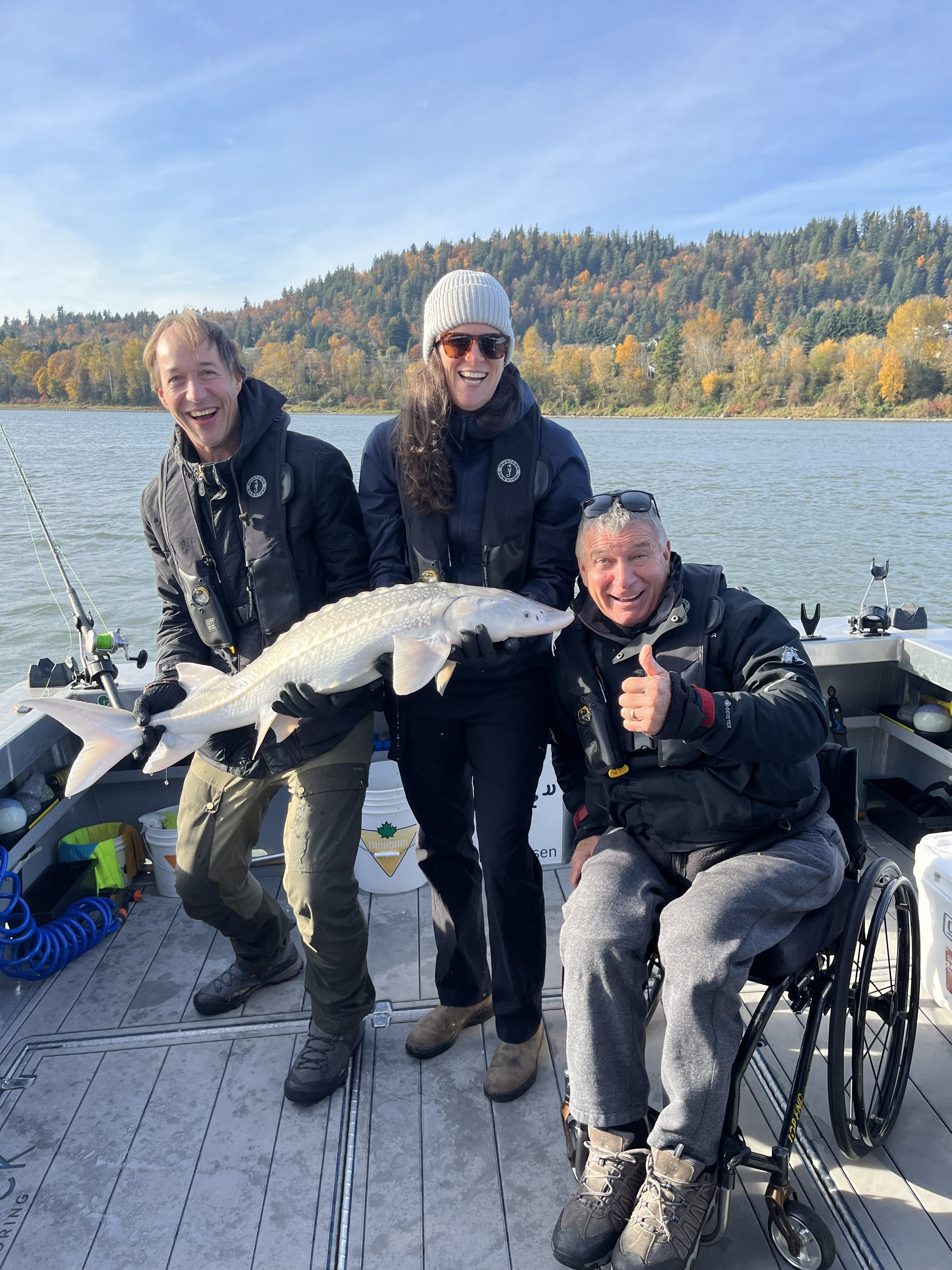
Our Foundation decided to create an Accessible Outdoors Program, and we were able to get an incredible and fundamental donation from one of our board members, Ryan Peterson and his wife, Monica, through their family’s Peterson Family Foundation. Ryan’s brother had struggled with a disability, and he loved our idea to custom build a boat that would be functional enough to have an opening door on the side where it would be level with the dock. We have three lifts inside the boat. There’s a lift for the pilot and the co-pilot to drive the boat if you happened to be in a wheelchair. We also have hearing modification technology. We made sure that there was a gyroscopic centrifuge so the boat wouldn’t tip too much. If you're a high-lesion quadriplegic and moving your hands is a challenge, we’ve modified a fishing reel to include sip-and-puff technology. All these things were adopted so people could have this amazing experience independently or with their family and friends.
We were grateful to work with an innovative boat builder to help us consider all the modifications needed for an accessible vessel. We also worked with partners from the harbour authorities and industry champions to consider a holistic user experience. This includes ensuring there are ramps to the dock and the pier, as well as an accessible path to the parking lot and e washrooms.
If people join us, they'll experience an example of what could happen when champions and leaders decide to increase accessibility in their local community, or their favourite water destination. If thousands of people did that across the country, imagine how accessible the outdoors would be.

What would you like health professionals to know about the experiences of people with disabilities in nature, and what do we and government need to do to reduce barriers to accessing nature?
The first thing health professionals should do is understand that it is possible. It's happening everywhere, and there are local champions and micro-resources. Do your best to know what's out there, and to connect with like-minded groups like ours. That way, you can help advise and recommend that a person with a disability access the outdoors. Why? Well first, it is an investment in their health, and second, it's a chance for people to have a sense of belonging. Third, by being involved in nature people will recognize that we must also invest in it, and help conserve nature because it is fragile. It needs all of us to do our part.
From a policy point of view, we can also start to go upstream. When we're talking about parks, economies and public spaces, we should make sure we invest in accessibility, because it's a modest investment relative to the return. We should also recognize that it's good for the economy. Global tourism for people with disabilities is the fastest-growing section of tourism, and we want them to be able to access it. We should be proud of our natural environment, and share it with the world.
There are 1.3 billion people globally living with a disability. With aging boomers wanting to travel, they can come here if we're accessible. If we're not, they'll go to America, Europe, or Asia, which is okay, but we should be trying our best to bring them here.

Speaking of tourism, you've travelled to many different places around the world. Where is your favourite place to spend time in nature in Canada and elsewhere?
I may be biased, but Canada will always be high on my list. I was born and raised in British Columbia, I love the West Coast, and the ocean Rivers Inlet, Haida Gwaii, Langara Island and the Stikine are some of the most beautiful places. Atlin as a community is one of our province’s best-kept secrets, and a place that people should know about. Atlin Lake is the largest natural lake in British Columbia. It's surrounded by mountains and fed by the Llewellyn Glacier. The glacier’s meltwater runs into the mighty Yukon River. It's a spectacular place. As a matter of fact, I'm heading there next week to spend a couple of weeks with my dear friends to fish and decompress, and prepare myself for another busy year.
Rick, I'm assuming that spending time outside helps contribute to the drive and energy you have to keep going. Do you have any tips for people with and without disabilities who are trying to fit more nature into their lives?
When you are experiencing nature, take the time to settle for a moment. Feel what it really means to be in the outdoors and nature. Because when you’re present, you will be able to tangibly feel it.

We're all connected as humans, and humans are connected to nature and to this planet. We can never divorce ourselves from it without dire consequences. Find out where these places are in nature that call to you, and try to integrate them into the regular routine in your life. This way you can both benefit from it and contribute to it.
What role do you think health professionals have to play in inspiring people to protect nature and the planet?
I think health professionals should lead by example. They're overwhelmed, and our health care system is under incredible stress. The need for transformation and sustainability is high. There's running the ship and changing the ship, and there are so many demands. I have tremendous empathy and respect for healthcare professionals. To stay resilient in this field of work, I hope that healthcare professionals will balance the long journey by taking the time to pause and enjoy nature.

It’s also important for healthcare professionals to have that conversation with their patients and clients. We all have a role to play in identifying barriers in the health system. People with disabilities are often left behind, or literally shut out because of either unintentional barriers both indoors and outdoors or intentional ones like stigma, ableism or bias.
Recognize that disability isn't a “life sentence” to Purgatory. It's challenging, and there can be pain and suffering, but it's still a life, and a whole life. We can find a way to navigate through that, and make sure people recognize they still have a lot of life to live. The outdoors and nature can be part of that.
I want to say a huge thank you to you and your community for what you are doing for Canada, and indeed for the world. It's an honour to be able to speak with you, and help synergize and build connections between the world of people who happen to have a disability, and people who are in the role of caring and helping them be healthy, and recover from disabling conditions, disease or trauma, and stay healthy.

Discover more about Rick Hansen and the Rick Hansen Foundation’s ground-breaking Accessible Outdoors Program here.